
What should you clarify before your first erotic massage?
Start with the information you actually need
Think about what matters to you at a first appointment. Perhaps you want to understand where an initial conversation fits into the visit. You might be interested in a particular massage, a quiet setting or the possibility of enquiring as a couple. Write your preference in one ordinary sentence and add your main unanswered question. This does not need to become a detailed message yet. The exercise helps you distinguish an appealing atmosphere from information that genuinely helps with your visit. A picture may attract your attention, but your decision should rest on the details that concern you. Knowing what you need turns a confusing search into a manageable selection.
Read beyond the opening description
Important conditions are not always in the first heading. Read the information about time, appointment arrangements, intended visitors and possible additions. One programme may have a longer description without necessarily being a better fit. Look for the details you actually need for a first visit. If something is missing, note the question alongside the studio's name. This prevents information from different profiles becoming mixed together later. The guide to choosing a suitable studio provides a clear sequence for this. By the end, you should be able to explain which offer interests you and which point still needs an answer before you agree to it.
Read beyond photographs and premium labels
An elegant room or the words VIP and exclusive do not automatically describe additional services. Ask for the actual scope. If information remains unclear, you can ask again before paying and take time to decide.
Separate preparation from a confirmed commitment
Gathering information or opening a profile does not confirm an appointment. Use this first stage to understand the options and organise your questions. You can change your selection if the description does not fit what you had in mind. You can also ask a question without supplying an extensive personal explanation. A useful first step is small and clear: understand an offer, clarify a condition or find the appropriate contact route. Do not assume that you should know everything in the first message. Especially for a first visit, straightforward follow-up questions are a normal part of making your own considered choice. Reading a description is an opportunity to decide, rather than an obligation to continue.
Which massage offer fits what you are looking for?
Look for a description rather than a promise
Terms such as Tantra, Nuru and erotic massage can create expectations, but they do not replace a concrete programme description. Read how the studio explains its own framework. Notice whether something is presented as a separate appointment, an addition or a particular visit format. An impression from another article is not a reliable shortcut. If a term is still unclear, the comparison of published massage descriptions can help. Then keep only the details that belong to the actual profile in your selection. Preparation becomes easier when you compare one or two understandable programmes, rather than treating a long list of names as interchangeable possibilities.
Understand the programme first
Erotic massage is not one standard procedure. Studios may use Tantra, Nuru and body-to-body differently. Ask what the selected programme includes, how long it lasts and how boundaries are discussed. An appealing name cannot replace a practical explanation.
Check the intended visitor and visit format
Who is the programme described for? This is particularly relevant if you want a specific format, such as a couples appointment. A photograph of several people or a general reference to relaxation does not explain how an individual enquiry is organised. Look for an explicit description and, where necessary, ask about the room arrangement, timing and named programme. Keep the question related to your actual circumstances. You do not need to research every possible format if only one interests you. The same applies when choosing between a first solo visit and an enquiry together: compare the stated conditions, rather than an imagined hierarchy. A suitable framework answers your own questions clearly.
Express preferences and boundaries in ordinary words
Preparation can be quite simple. Write down what interests you, what you still want to know and which conditions would not suit you. Detailed or intimate descriptions are unnecessary. “I would like to understand the timing beforehand” and “I would like to know which product is used” are clear, ordinary sentences. They also help if you feel nervous about making an initial enquiry. You do not have to adopt advertising language or use wording that feels uncomfortable. What matters is being able to explain your question and recognise whether the answer addresses it. A respectful exchange leaves room for clarification and a considered decision, without pressure to imitate someone else's expectations.
Arrival does not mean an immediate start
Discuss preferred covering, known product sensitivities and touch you do not want before beginning. The practitioner has personal and professional boundaries too. Booking is not blanket consent, and an agreement can be revisited during the appointment.
How do you plan time and costs for a first visit?
Ask what the appointment duration means
For a first appointment, it is especially useful to know whether the stated duration means the massage itself or the entire stay. Depending on the description, a conversation, changing or showering may be included. Ask about the specific programme rather than assuming a fixed division of time. The distinction between massage time and the whole visit makes that question easier to frame. Also allow your own buffer for getting there and returning. This buffer is your planning decision, not an additional service from the studio. If you have another appointment afterwards, take it into account. A number beside a programme then becomes a time window you can actually plan around.
Request a price for your specific enquiry
A published amount can provide useful guidance, but it needs to belong to the programme and duration you want. Such combinations are not recorded for every studio in the Berlin selection. A missing amount initially means that you should ask. Read the Berlin price examples with their published scope as examples of how to interpret an offer. Rather than asking only for “the price of a massage”, name the programme and desired duration. Mention whether you mean a described additional option. The reply should then be easier to interpret. A specific answer for your appointment is more useful than a general figure whose conditions remain unclear when you compare it with something else.
Clarify the practical conditions together
Time and price are connected to other practical arrangements. Ask how an appointment is confirmed, which payment method is expected and what conditions apply to a change or cancellation. Do not import assumptions from another business. A short note of the confirmed points is enough for preparation. Distinguish publicly described information from what you have been told individually for your appointment. If a detail has changed, summarise it and ask for confirmation again. This is a way to avoid misunderstandings, rather than a complicated administrative exercise. Before visiting, you should understand which arrangement you are considering and which questions remain unanswered. A friendly exchange and clear practical information can support each other.
How do you find and confirm the correct visit location?
Check the address and entrance before travelling
A district provides initial orientation, but it is not a complete meeting point. Check the street, house number and, if relevant, the described entrance. In the Berlin selection, confirming the precise location is sensible for IDYLLE because the selected record contains Wipperstraße without a complete house number. Do not infer further details from that. Ask the studio for the actual location of your appointment. A saved map can then help you organise the journey, but it replaces neither a confirmed address nor an agreed appointment. For a first visit, dealing with this beforehand is more comfortable than trying to reconcile several location descriptions shortly before arrival. Keep the answer attached to the correct business name.
Consider the location in the context of your day
A studio in Friedrichshain, Charlottenburg or Weißensee may fit very differently into your day depending on where you start. Choose the location in relation to your own journey. Consider where you will leave from, where you will go afterwards and whether you depend on a particular connection. You do not need a supposedly exact distance from a guide. The relevant question is whether the confirmed address fits your time window. A longer journey can still be suitable if the described offer answers your main questions. Equally, a nearby location is not automatically the best choice. Preparation connects your practical journey with the actual appointment, rather than simply seeking the closest point on a map.
Keep a contact route for practical questions
Keep the agreed contact method somewhere you can find it if you are delayed. This does not mean every message will automatically be read or that a last-minute change will be possible. It is practical preparation for a specific question. Keep the business name, confirmed appointment and address together in your own note. You will then not have to reopen several profiles while travelling and work out which information belongs to which studio. Avoid forwarding private information unnecessarily or exposing it in a shared note. A useful plan stays manageable: the correct location, a sensible time allowance and a clear way to send a message if something genuinely needs clarification. You do not need an elaborate itinerary for this.
What can you prepare for comfort and discretion?
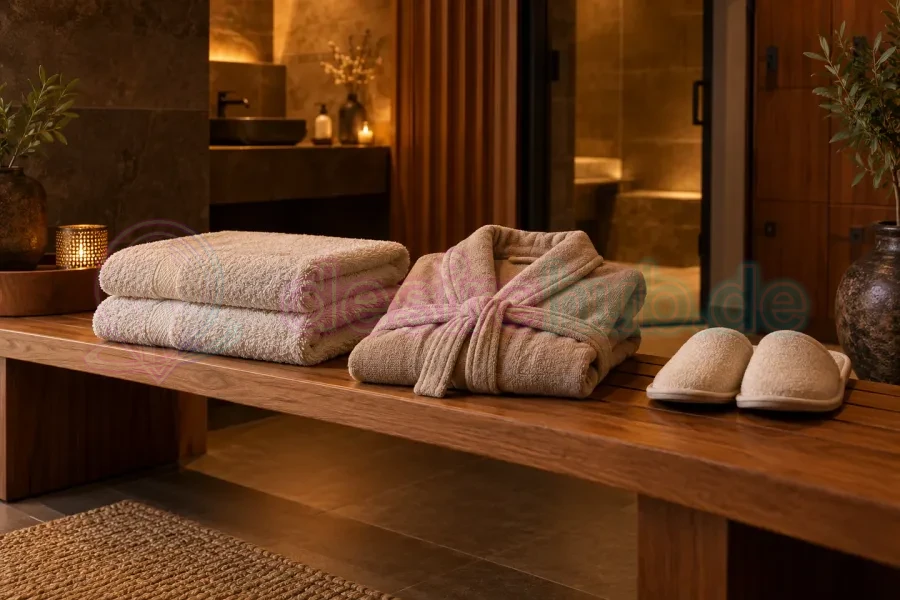
Ask about oil, gel, fragrance and supplied linen
If products or textiles matter to you, ask about them beforehand. You can enquire which oil or gel is used, whether ingredient information is available and which linen is supplied. That is more specific than asking whether a product is “good”. The BfR information on cosmetic products provides background on this product category. It does not replace individual advice about a known sensitivity. For appointment preparation, the next step remains a clear product question to the studio. You can also ask whether you should bring anything. This produces a small, useful packing list based on the provider's actual information, rather than assumptions about a supposedly identical routine everywhere.
Choose deliberately which personal details to share
An initial enquiry can remain factual. For every additional detail, consider whether it is needed for the question currently being asked. For background on that principle, you can read the BfDI guidance on limiting the use of personal data. For the actual contact, check which channel the studio publishes and which information it requests for the next arrangement. A general privacy notice is not a promise covering every conceivable situation, and you may ask when something is unclear. Avoid sending a long personal history because you are nervous when all you initially want is to clarify a programme or time window. A short message can be polite, specific and restrained at the same time.
Privacy and a clear decision
Ask why contact details are needed and who answers your enquiry. Do not photograph anyone without permission. If you feel uncomfortable, say so and pause the visit. A well-prepared first appointment depends on understandable conditions rather than surprise.
Prepare useful questions instead of a perfect sequence
You do not have to map out every minute of your first visit in advance. Prepare a few questions that give you orientation instead. What is included in the agreed time? When are preferences discussed? Which organisational instructions does the studio itself provide? If an answer is unclear, summarise it in your own words and ask whether you understood correctly. That helps more than memorising a sequence that might not suit the selected programme. Anticipation and uncertainty can exist together. Preparation has served its purpose when it helps you make your own decision and identify any information you still need. It does not have to meet someone else's expectations or predict a particular experience.
How do you write the first enquiry and assess the reply?
Use a short message with a clear purpose
Summarise the programme, a possible time window and your main unanswered question. The template for a discreet appointment enquiry can help you put these in a clear order. For example: “I am interested in the described programme and would like to clarify the appointment arrangements. Which duration and price apply, and how is the next step agreed?” Adapt this to what you actually want instead of inserting as many search terms as possible. A useful message is not advertising copy. It should let the studio respond to an identifiable information need. If you have several questions, place the most important one first. Further details can be clarified afterwards in a focused way.
Questions for the first message
Check whether an appointment is required, your preferred date, duration and total amount. Ask whether preparation, conversation and shower time are included, which payment methods are accepted and how cancellations work. A starting price may differ from the quote for your choice.
Use the corresponding profile to find contact details
For a named business, the next step should be unambiguous. As a Berlin example, the My Temple business profile on desirehub leads to that studio's published information and contact routes. Check that you have opened the correct business and follow the information there. The profile is a place for information and contact; an individual appointment is arranged through the exchange with the business. If you compare several studios, keep their profile details and replies separate. Before enquiring, check the selected business name and described location again. Your message will then refer to information you actually read, rather than details remembered from another profile.
Confirm the main details in your own words
Once your main questions have answers, summarise them briefly: business, location, date, time allowance, programme, cost scope and any agreed preparation. Check whether these points match the reply. If something is missing, ask a focused question rather than silently filling the gap. If a response does not address your original question, you can request a clearer explanation or reconsider your selection. A first appointment is not better prepared simply because you mark every open point as resolved as quickly as possible. What matters is whether you understand the agreed framework. This short summary completes your preparation and helps you approach the visit with less organisational uncertainty. Keep it somewhere you can consult before setting out.
Sources and scope
Product and privacy references checked on 31 October 2026. Operator examples retain their individual source dates.
- BfR · Kosmetik: Inhaltsstoffehttps://www.bfr.bund.de/fragen-und-antworten/thema/kosmetik-artikel-alle-inhaltsstoffe-muessen-geprueft-sein/
- BfDI · INFO 1 · Datenschutzhttps://www.bfdi.bund.de/SharedDocs/Downloads/DE/Broschueren/INFO1.pdf?__blob=publicationFile&v=61#page=21
- My Temple · Vorbereitung, Termin und Paarformathttps://www.mytemple.de/massagen/wer-wie-was-warum/Read on 10/26/2026
- Kashima · Tarife, Zusatzrituale und Zeitumfanghttps://www.kashima.de/tantra-massagen/Read on 10/26/2026
The images illustrate the subject and do not show a listed studio. Published operator information does not replace an individual appointment agreement.
Frequently asked questions before a first erotic massage
Must I know exactly which programme I want in my first message?
No. You can initially explain which question you would like to clarify and which published offers you are considering. It helps to make the uncertainty specific: is it about the definition of time, the intended visitors, an additional option or the organisational arrangements? The studio can then respond to an identifiable point. A general request to explain everything is often less manageable than two short questions. At the same time, you do not have to justify yourself with a lengthy personal message. Your first enquiry can simply help you find your bearings. Compare the answer with the information already on the page and note any remaining gaps. Only then decide whether to continue the exchange or consider another offer. Asking for orientation and confirming a booking are separate steps.
What if I still have an important question before visiting?
Use the agreed or published contact method and name the point as precisely as possible. If it concerns an existing arrangement, provide enough context for the studio to identify it, without adding unnecessary private details. You might want to confirm the address, entrance or meaning of the stated duration again. Do not infer a particular situation from the absence of an immediate response. A guide cannot guarantee whether or when a reply will be possible. If the open point is important to your decision, continue treating it as open. Clear preparation also means leaving uncertainty visible instead of replacing it with an assumption because time feels short. This helps you recognise which detail still needs an answer.
A clear subject line or a short opening sentence referring to the earlier arrangement can help. Follow it with the actual question. This avoids creating a second, conflicting description of what you want merely because you word everything differently in a new message. When the studio replies, add the answer to your personal note and consider whether it resolves another practical point too. For example, a confirmed address may help with your journey without saying anything about other organisational details. Keep those levels separate. Your message should resolve a particular uncertainty, rather than introducing new assumptions about the whole visit. There is no need to repeat private information that is unrelated to the point you want to clarify.
How can I tell whether I am sufficiently prepared to decide?
You can describe the offer in ordinary words, know the confirmed visit location and understand the stated time and cost scope. Questions that matter to you about preparation, products or further contact have answers, or remain deliberately marked as open. A first decision often does not require more than that. A perfect prediction of the visit would be neither realistic nor necessary. What helps is knowing what your selection is based on and which conditions you can read again. Keep your note somewhere you can find it before travelling. If your information needs or preferences change, you may ask again. A well-prepared decision remains your own and comes from an understandable framework, rather than a feeling that the next click must happen as quickly as possible.
You can check your preparation with one simple question: could I explain my practical plan without replacing missing information with guesses? This means the organisational details, rather than private matters. If you notice a gap, you have already identified your next useful question. If everything that matters to you is understandable, you do not need to keep researching just to have read more general articles. Preparation should increase your own clarity. It is not a competition to collect the largest amount of information or the greatest number of programme names. Knowing when you have enough relevant information is part of making the search useful for your own appointment.
Your next step
My Temple business profile on desirehub